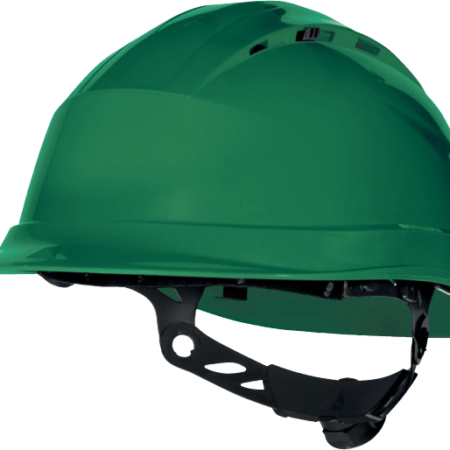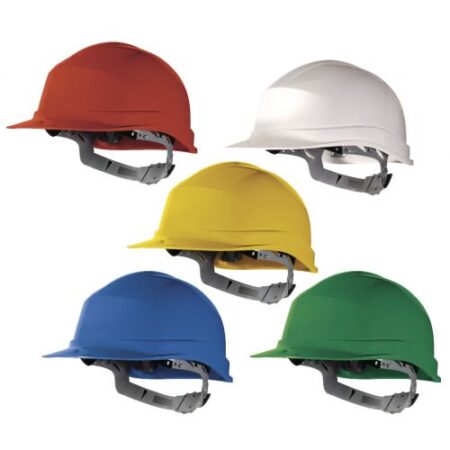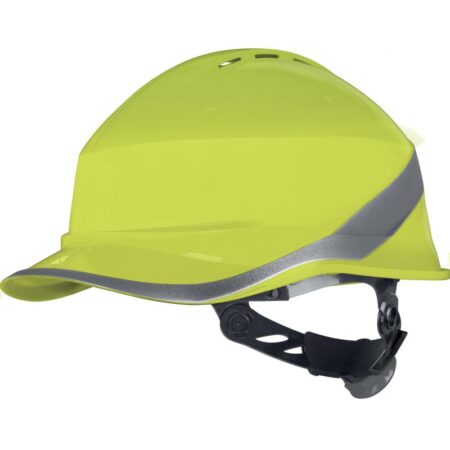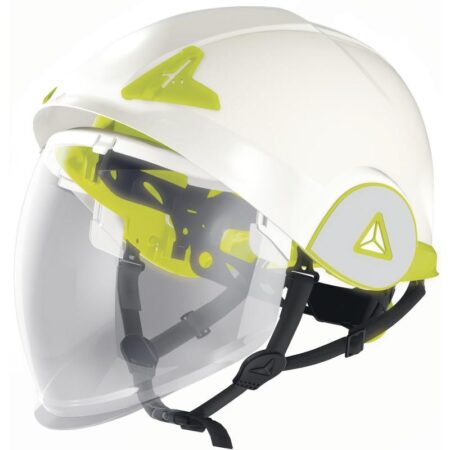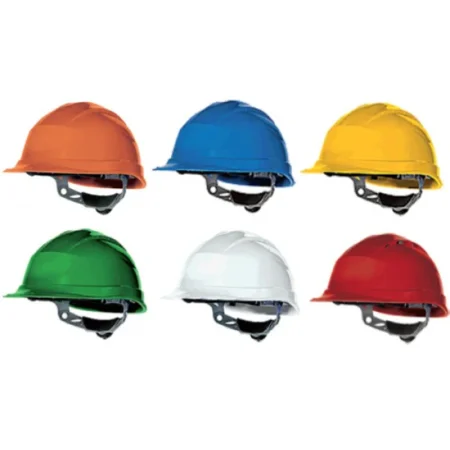


Description
Harness: Textile lining: polyamide. Sweat band: EVA foam. Headband: HDPE.

Technical details
Type of product Safety Helmet
Shell material ABS
Textile harness PA (Polyamide)
Head size (cm) 53-63 cm
Harness headband material Polyethylene
Harness adjustment Wheel ratchet
Ventilation Vented
Main colour Yellow
Headdress points 8 points
Neckband material EVA foam
Helmet peak None
Jugular points 3 points
Available or replacement accessories
Badge holder, Reflective strip,
Perspiration headband, Shield, Lens,
Basane, Ear protection, Mesh visor,
Neck protector, Logo, Wheel-ratchet
harness adjustment
Mounting notch (for earmuffs
fixation) yes
Custom logo Unavailable
Compatible product Lens, Shield, Earmuffs
Low temperature resistance -20°C
High temperature resistance +50°C
Weight (g) 368
Weight (lbs) 0.8097
Lifespan from first use 48 months
Lifespan from manufacturing 84 months
Contained colours Yellow
Jugular material Textile
EN 397
Protective helmets for industry
Mandatory
Impact*: force transmitted to the headform must not exceed 5 kN at the fall of an object of 5 kg from a 1 m height. The impact energy of the helmet at
the end of the test is 49 J.
Penetration*: the tip of the mass used in the test (3 kg over 1 m) must not come into contact with the skull.
Flammability: the helmet should not burn with fl ame emission more than 5 seconds after removal of the fl ame.
* The impact and penetration tests are performed at room temperature, at 50°C and at -10°C.
Optional
In extreme temperatures: impact and penetration tests are conducted at room temperature at 150°C, at -20°C or -30°C.
Protects against accidental short-term contact with a live electrical conductor up to 440 VAC.
Protects against lateral compression. The maximum deformation of the helmet should be ≤ 40 mm.
Resistance to molten metal splashes.
MM-20°C +50°C